Drink your tea slowly and reverently,
as if it is the axis
on which the world earth revolves
– slowly, evenly, without
rushing toward the future;
Live the actual moment.
Only this moment is life.
Thich Nhat Hahn

May you find something to help you on your journey.
Drink your tea slowly and reverently,
as if it is the axis
on which the world earth revolves
– slowly, evenly, without
rushing toward the future;
Live the actual moment.
Only this moment is life.
Thich Nhat Hahn
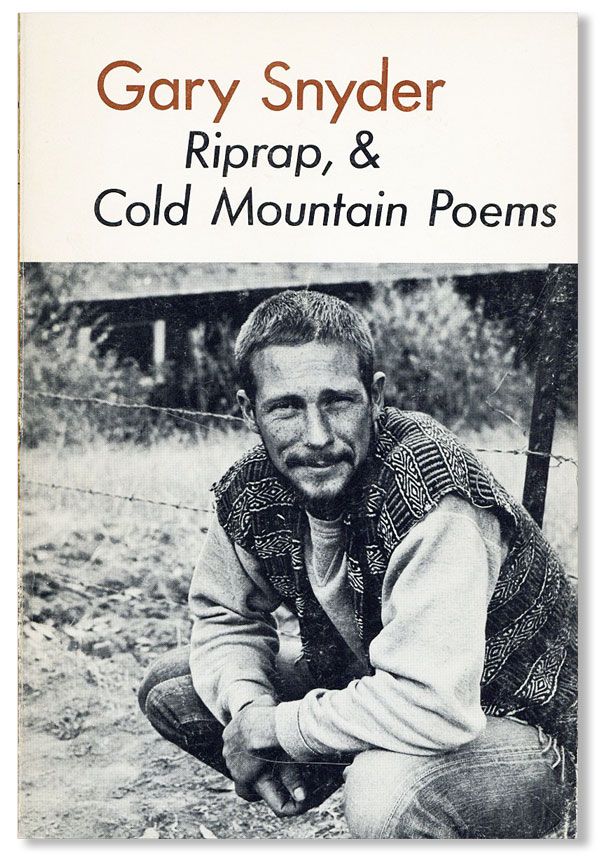
Author: Gary Snyder
Rating: 4/5
Read: 4/18, 2/19
Who Should Read: People interested in Zen, poetry, Chinese thought
Hanshan, or “Cold Mountain”, is one of my favorite Chinese poets (alongside Stonehouse). Hahshan was (supposedly) a Chinese Buddhist monk who lived in isolation in the wilderness. The poems attributed to him sparkle with a disdain for civilized life and carry a Zen and Taoist bent.
Cold Mountain Poems is a small collection poems translated by Gary Snyder, who does a wonderful job translating Hanshan’s words and feelings. Included are some of my favorite poems from this collection.
Gary Snyder on why he was qualified to translate Cold Mountain’s poems:
I had been a mountaineer and forestry laborer as well as a bookish scholar for several years already, and simply could draw on a wide experience of events and words and observations in finding ways to represent the Han-shan imagery. I also regularly made a practice of internalizing and visualizing the taste of the whole scene – cold, wet, rocky, lonely, or whatever was called for – to the point that I could write it out with some sense of presence. This doesn’t always work by any means, but it is exciting when it does. It reaches across time and space.
On the interest in such poetry:
At least for non–East Asians, they touch us not because of the invocation of a hermetic ideal or solitary asceticism, but because of the almost joyful rejection of materialism and the absolute pleasure in being in the great world “with a sky for a blanket,” aware of living a life apart from the value-assumptions of mainstream people.
There is a deep strain of non-ideological dubiousness about the large materialistic goals that are the official “dream” of developed-world people and certain others worldwide.
Here are some of my favorite poems from this collection.
In a tangle of cliffs I chose a place –
Bird-paths, but no trails for men.
What’s beyond the yard?
White clouds clinging to vague rocks.
Now I’ve lived here – how many years –
Again and again, spring and winter pass.
Go tell families with silverware and cars
“What’s the use of all that noise and money?”
Men ask the way to Cold Mountain
Cold Mountain: There’s no through trail.
In summer, ice doesn’t melt
The rising sun blurs in swirling fog
How did I make it?
My heart’s not the same as yours.
If your heart was like mine
You’d get it and be right here.
Clambering up the Cold Mountain Path,
The Cold Mountain Trail goes on and on:
The long gorge choked with scree and boulders,
The wide cree, the mist-blurred grass.
The moss is slippery, though there’s been no rain.
The pine sings, but there’s no wind.
Who can leap the world’s ties
and sit with me among the white clouds?
Spring-water in the green creek is clear
Moonlight on Cold Mountain is white
Silent knowledge – the spirit is enlightened of itself
Contemplate the void: this world exceeds stillness
Cold Mountain is a house
Without beams or walls.
The six doors left and right are open
The hall is blue sky.
The rooms all vacant and vague
The east wall beats on the west wall
At the center nothing.
Borrowers don’t bother me
In the cold I build a little fire
When I’m hungry I boil up some greens.
I’ve got no use for the Kulak
With his big barn and pasture –
He just sets up a prison for himself.
Once in he can’t get out.
Think it over –
You know it might happen to you.
If I hide out at Cold Mountain
Living off mountain plants and berries –
All my lifetime, why worry?
One follows his karma through.
Days and months slip by like water,
Time is like sparks knocked off flint.
Go ahead and let the world change –
I’m happy to sit among these cliffs.
Some critic tried to put me down –
“Your poems lack the basic truth of Tao”
And I recall the old-timers
Who were poor and didn’t care.
I have to laugh at him,
He misses the point entirely,
Men like that
Ought to stick to making money.
If you are interested in purchasing this book, you can support the website by using our Amazon affiliate link.
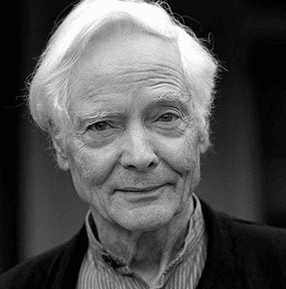
by W.S. Merwin
First forget what time it is
for an hour
do it regularly every day

then forget what day of the week it is
do this regularly for a week
then forget what country you are in
and practise doing it in company
for a week
then do them together
for a week
with as few breaks as possible

follow these by forgetting how to add
or to subtract
it makes no difference
you can change them around
after a week
both will help you later
to forget how to count

forget how to count
starting with your own age
starting with how to count backward
starting with even numbers
starting with Roman numerals
starting with fractions of Roman numerals
starting with the old calendar
going on to the old alphabet
going on to the alphabet
until everything is continuous again

go on to forgetting elements
starting with water
proceeding to earth
rising in fire

forget fire
Poetry Foundation: Poetry, May 1972
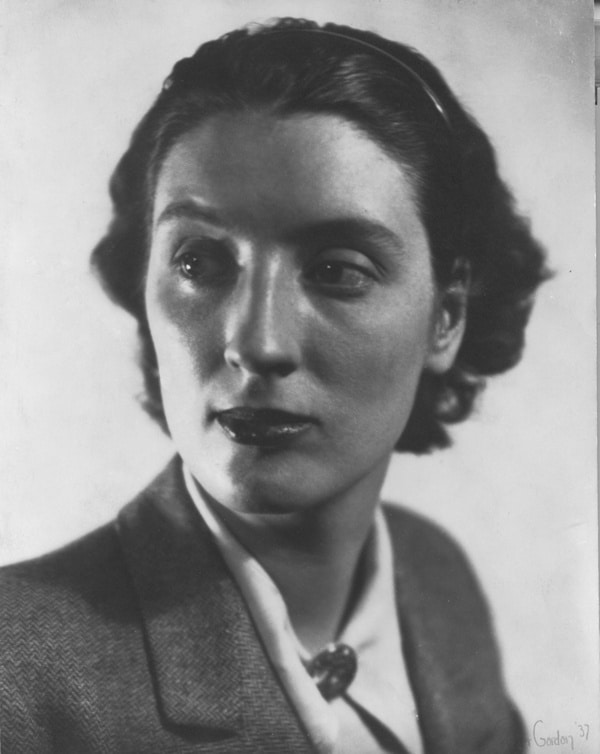
CANTICLE 6
by May Sarton
Alone one is never lonely: the spirit
              adventures, waking
In a quiet garden, in a cool house, abiding single there;
The spirit adventures in sleep, the sweet thirst-slaking
When only the moon’s reflection touches the wild hair.
There is no place more intimate than the spirit alone:
It finds a lovely certainty in the evening and the morning.
It is only where two have come together bone against bone
That those alonenesses take place, when, without warning
The sky opens over their heads to an infinite hole in space;
It is only turning at night to a lover that one learns
He is set apart like a star forever and that sleeping face
(For whom the heart has cried, for whom the frail hand burns)
Is swung out in the night alone, so luminous and still,
The waking spirit attends, the loving spirit gazes
Without communion, without touch, and comes to know at last
Out of a silence only and never when the body blazes
That love is present, that always burns alone, however steadfast.
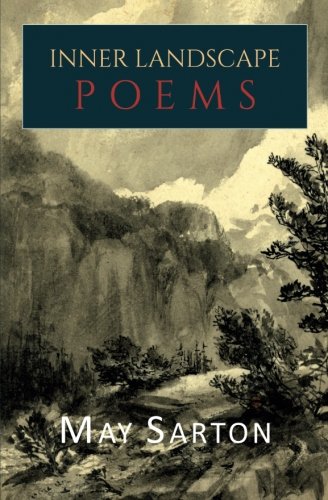
“Canticle 6” can be found in Inner Landscape.
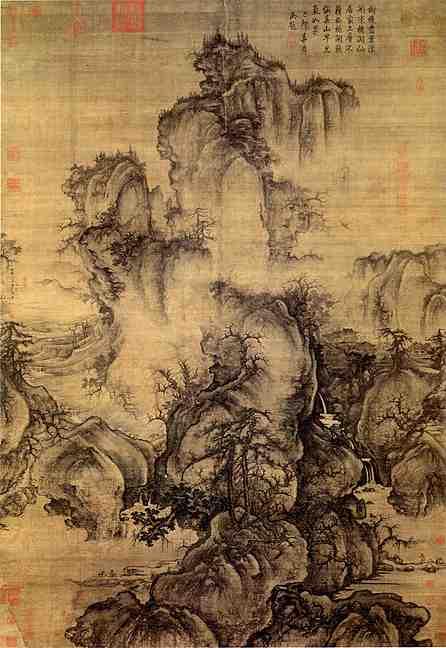
By Li Po, trans. Sam Hamill
The birds have vanished down the sky.
Now the last cloud drains away.
We sit together, the mountain and me,
until only the mountain remains.