There is no replacement for showing up every day, putting your butt in the seat, and doing the work. Accomplishment takes discipline.
When you show up every single day, you don’t even have to make tremendous progress. Writing one page a day is still 365 pages a year – enough for a full book. Of course, we can usually get more output than that.
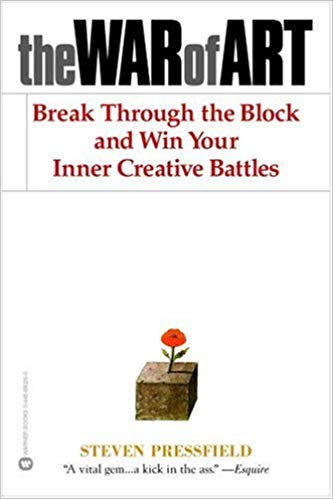
Showing up every day significantly the possibility that something meaningful will happen. We show the muse that we are dedicated, at Steven Pressfield says. And the muse rewards that with inspiration and insight. Our daily work, our continued presence, cultivates the field and enables ideas to flow. it takes time to get into that state, and frequent stops/starts only hinder it.
Showing up every day also enables your gains and your work to compound. Initial progress may feel slow, but over time your efforts compound and increasingly yield higher quality and outsized rewards.
Showing up every day keeps momentum going. Even when we finish a project, we can’t stop. After all, switching gears is most effective when we’re already in motion.
Related Ideas
- The way to complete a project is with continual progress every day, no matter how small
- The power of compounding
References
-
Daily Rituals by Mason Currey
He was dismissive of inspiration, saying that if he waited for the muse he would compose at most three songs a year. It was better to work every day. “Like the pugilist,” Gershwin said, “the songwriter must always keep in training.”
-
Are you doing what you said you wanted to do? by Seth Godin
If you want to be a poet, write poetry. Every day. Show us your work.
-
Watercolor 365 by Leslie Redhead
However, because painting is my livelihood and I’m not going to get any better by just thinking about painting, paint I must. So I show up in my studio every morning and paint until I feel like painting. I tell myself that I will spend one hour in the studio painting, and I will paint until I feel like painting. This usually works, and then I end up painting like mad!
-
The Practice by Seth Godin
It’s hard to get blocked when you’re moving. Even if you’re not moving in the direction that you had in mind that morning.
Isaac Asimov published more than four hundred books. How did he possibly pull that off? Asimov woke up every morning, sat in front of his manual typewriter, and he typed. That was his job, to type. The stories he created, the robots and the rest, were the bonus that came along for the ride. He typed when he wasn’t inspired. The typing turned into writing and he became inspired. We don’t write because we feel like it. We feel like it because we write.
-
Put Your Ass Where Your Heart Wants to Be by Steven Pressfield
The Muse does not count hours. She counts commitment. It is possible to be one hundred percent committed ten percent of the time. The goddess understands.
-
Bird by Bird by Anne Lamott
But while he helped the prisoners and me to discover that we had a lot of feelings and observations and memories and dreams and (God knows) opinions we wanted to share, we all ended up just the tiniest bit resentful when we found the one fly in the ointment: that at some point we had to actually sit down and write.
-
How many words did you write today? by Steven Pressfield
When I sit down to write in the morning, I literally have no expectations for myself or for the day’s work. My only goal is to put in three or four hours with my fingers punching the keys. I don’t judge myself on quality. I don’t hold myself accountable for quantity. (At least not at this stage; later, I will.) The only questions I ask are, Did I show up? Did I try my best?
In other words, my goal (even after more than forty years of doing this) is simply to park my butt in front of the keyboard and work as hard as I can. I know from doing this for all those years that the physical act of sitting down at my desk for the required hours will produce, without fail, a day’s work.
And I know something more. If I can stack up enough days, enough weeks, enough months, in the end I’ll have a book. I’ll have a movie. I’ll have something.
-
3-2-1 Productivity, success, and 3 simple questions to improve your day by James Clear
Standup comedian Cameron Esposito on success:
There is no formula for success—you just begin and then you continue. I’m often asked how to have a career in stand-up and the answer is confoundingly simple: Do the work. Over and over again, just do the work. After you build the courage to get onstage that first time, it’s all about repetition.
-
The War of Art by Steven Pressfield
How many pages have I produced? I don’t care. Are they any good? I don’t even think about it. All that matters is I’ve put in my time and hit it with all I’ve got.
-
30 Day Challenge by Austin Kleon
Someone once asked me to distill all of my books into one piece of advice, and, off the top of my head, I said: “Try sitting down in the same place at the same time for the same amount of time every day and see what happens.”
In Steal Like an Artist, I wrote about comedian Jerry Seinfeld’s calendar method of daily joke writing:
You break your work into daily chunks. Each day, when you’re finished with your work, make a big fat X in the day’s box. Every day, instead of just getting work done, your goal is to just fill a box. “After a few days you’ll have a chain. Just keep at it and the chain will grow longer every day. You’ll like seeing that chain, especially when you get a few weeks under your belt. Your only job next is to not break the chain.”
In Show Your Work! I suggested the day as the primary unit of time for the artist:
Building a substantial body of work takes a long time—a lifetime, really—but thankfully, you don’t need that time all in one big chunk. So forget about decades, forget about years, and forget about months. Focus on days.
The day is the only unit of time that I can really get my head around. Seasons change, weeks are completely human-made, but the day has a rhythm. The sun goes up; the sun goes down. I can handle that.
And in Keep Going, I quoted the classic AA advice to “take one day at a time”:
“Any man can fight the battles of just one day,” begins a passage collected in Richmond Walker’s book of meditations for recovering alcoholics, Twenty-Four Hours a Day. “It is only when you and I add the burden of those two awful eternities, yesterday and tomorrow, that we break down. It is not the experience of today that drives men mad. It is remorse or bitterness for something which happened yesterday or the dread of what tomorrow may bring. Let us therefore do our best to live but one day at a time.”
-
James Clear
People who jump from project to project are always dividing their effort, and producing high quality work becomes difficult without intense effort.
Meanwhile, your average work day can be leisurely, yet also productive, if you return to the same project each day.
Do one thing well and watch it compound. -
Alexander Cortes
Imagine if for 10 years, you could not quit something
Every day, you had to practice
Every day, you had to find a way to train
Every day, you had to improve
Every day, you had to study
Every day, you did one thing that moved you closer and contributed to your momentum
How good do you think you would be? How successful? How “gifted” might you appear to people? How good would your “genetics” be?
Hype motivation fast starts explosive growth excitement, they all lose to the Endurance of discipline
Success comes down to those who did not quit.
Most quit
Don’t quit. Be consistent, keep going -
28 Lessons From Great Writers, Artists And Creators On Mastering Your Craft | Thought Catalog by Ryan Holiday
The only way to learn to write is to force yourself to produce a certain number of words on a regular basis.
—There Is No Secret to Writing Every Day, Three Essays on Freedom, John Dufresne